

The race to bring artificial intelligence deeper into healthcare is picking up speed. In a matter of days this month, OpenAI, Google, and Anthropic each announced new medical-focused AI capabilities, signaling growing competition among leading AI companies rather than a coincidence in timing.
Despite ambitious language about transforming healthcare, none of the newly released tools are approved as medical devices, cleared for clinical use, or designed to provide direct patient diagnoses. Instead, they reflect a shared strategy: build powerful AI systems that support healthcare workflows while staying on the cautious side of regulation.
A wave of closely timed launches
On January 7, OpenAI introduced ChatGPT Health, a feature that allows U.S. users to connect personal medical records through partnerships with platforms such as Apple Health, b.well, Function, and MyFitnessPal. The service is framed as a way to help users better understand health information, not to diagnose or treat conditions.
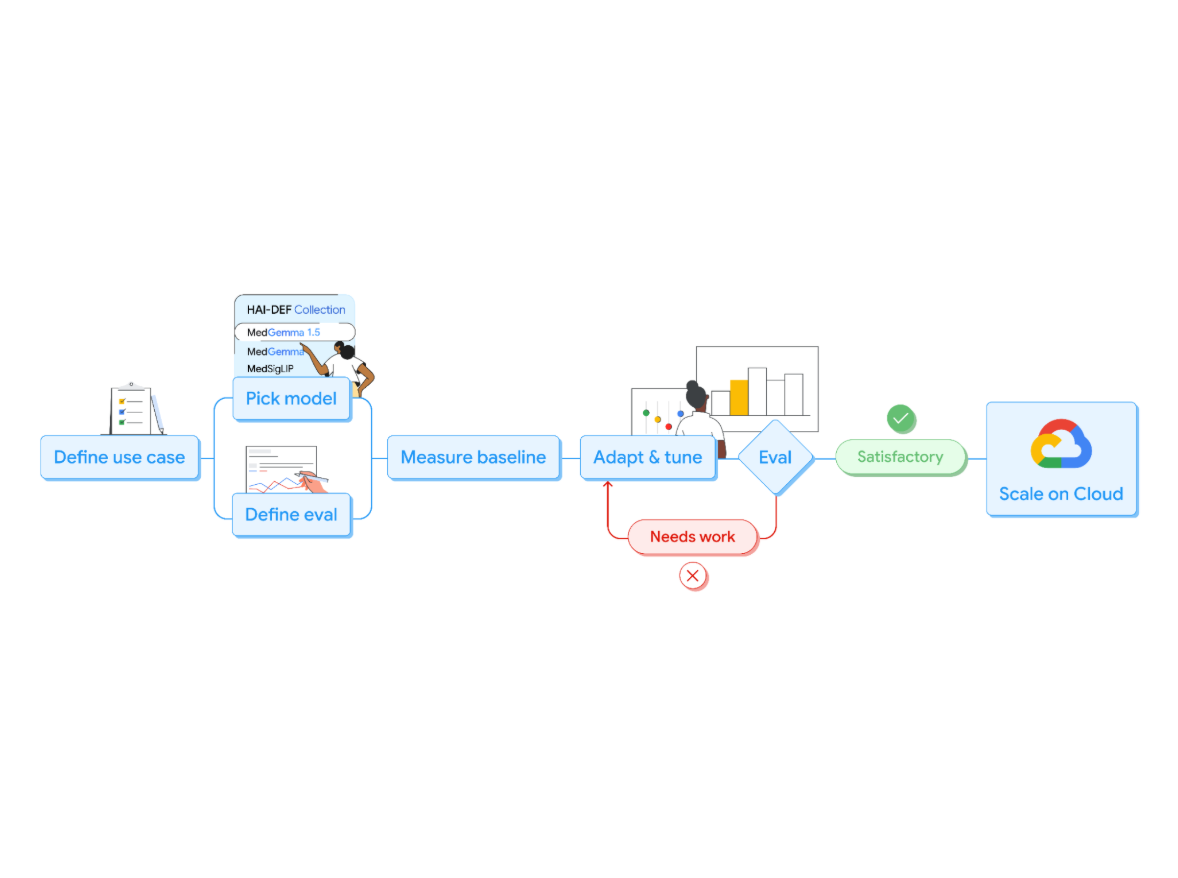
Google followed on January 13 with MedGemma 1.5, an update to its open medical AI model. The new version expands into complex imaging tasks, including interpreting 3D CT and MRI scans as well as whole-slide pathology images. MedGemma is aimed squarely at developers and researchers rather than clinicians or patients.


Anthropic announced Claude for Healthcare on January 11, focusing on enterprise use. The product offers HIPAA-compliant integrations with systems such as Medicare coverage databases, ICD-10 coding tools, and the National Provider Identifier Registry. Its target audience is health systems, insurers, and large organizations, not individual users.
While the products differ in access and delivery, they all address similar pain points in healthcare operations, including prior authorization reviews, claims processing, and clinical documentation.
Platforms over point-of-care tools
Under the hood, the three offerings look strikingly similar. Each relies on large, multimodal language models trained on medical literature and clinical data. Each emphasizes privacy safeguards and includes clear disclaimers that the tools are meant to assist professionals, not replace clinical judgment.
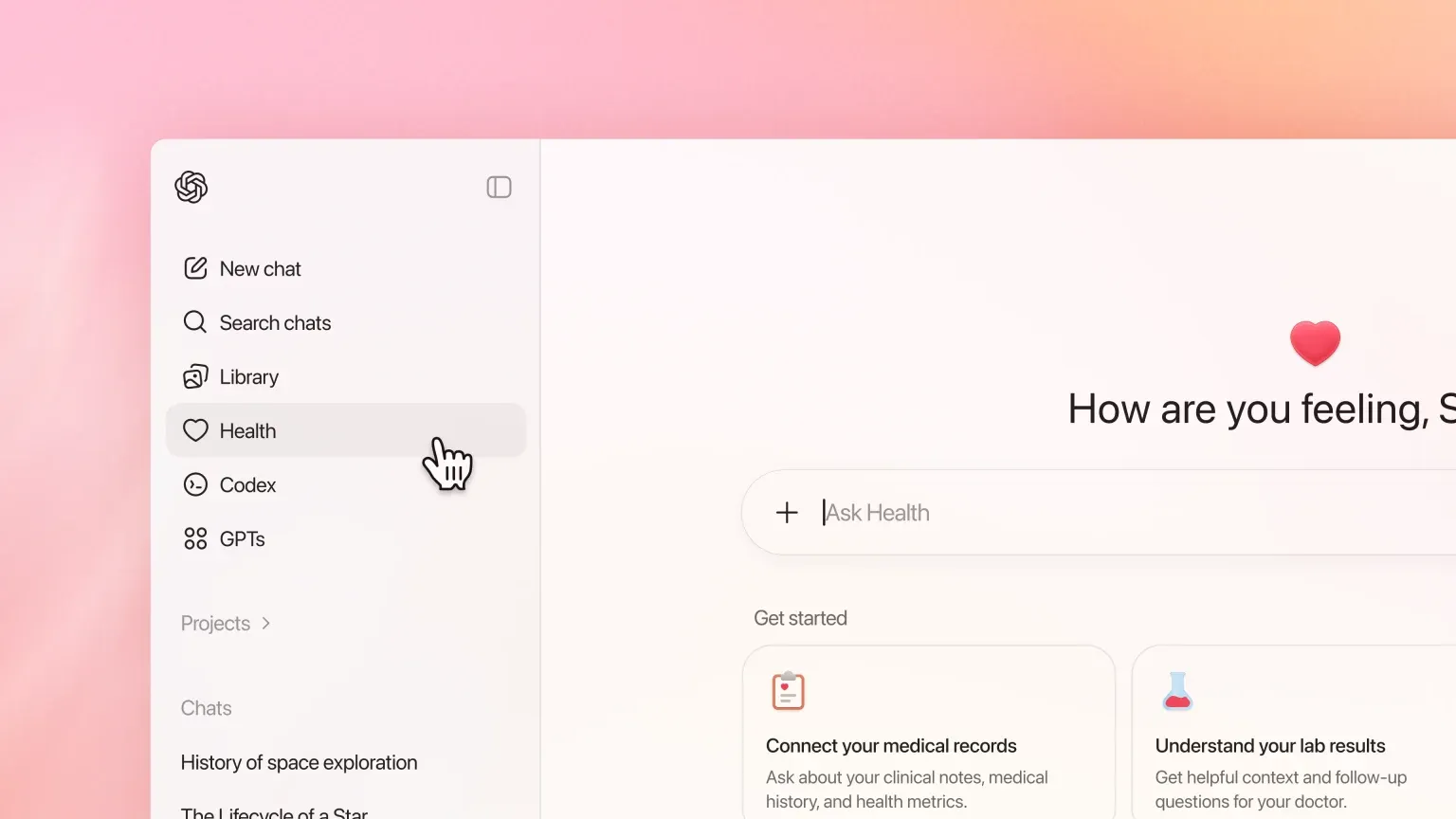
Where they diverge is in how they are deployed. OpenAI’s ChatGPT Health is consumer-facing, available through ChatGPT subscriptions with regional limitations. Google’s MedGemma is open and customizable, distributed through Hugging Face or Google Cloud’s Vertex AI. Anthropic’s Claude for Healthcare is designed to plug directly into existing enterprise systems, prioritizing institutional buyers.
Their regulatory positioning is equally aligned. All three companies explicitly state that their tools are not intended for diagnosis or treatment, a crucial distinction that keeps them outside formal medical device approval for now.
Strong benchmarks, limited real-world proof
Performance benchmarks suggest rapid technical progress. Google reports that MedGemma 1.5 reached over 92% accuracy on MedAgentBench, a Stanford-developed benchmark for medical task completion, and showed notable gains in imaging classification tasks. Anthropic reports similar benchmark scores for its Claude models, along with improvements in reducing factual errors.
OpenAI has taken a different approach, pointing instead to usage scale. The company says more than 230 million people worldwide ask health-related questions on ChatGPT each week, based on de-identified data.
Still, benchmarks are not the same as clinical validation. Controlled tests cannot fully capture the complexity, risk, and accountability required in real medical settings, where errors can have serious consequences.
Regulation and liability remain open questions
The regulatory path for generative medical AI remains uncertain. In the U.S., the Food and Drug Administration evaluates software based on intended use. Tools that guide diagnosis or treatment typically require approval, which none of these systems currently have.
Liability is another unresolved issue. If clinicians rely on AI-generated analyses for administrative decisions that later affect patient care, responsibility is not clearly defined under existing law. Regulatory clarity also varies widely outside the U.S. and Europe, with many Asia-Pacific markets still developing guidance for generative AI in healthcare.
This uncertainty slows adoption, particularly in regions where healthcare systems could benefit most from automation but lack clear rules for deployment.
Early adoption favors low-risk tasks
For now, real-world use remains conservative. Pharmaceutical companies are applying AI to automate regulatory documentation. Public health agencies are using models like MedGemma to analyze large datasets for policy insights. These applications focus on administrative efficiency rather than direct clinical decision-making.
The pattern is clear: organizations are starting where the risks are lower, even though the technology itself is advancing rapidly.



