
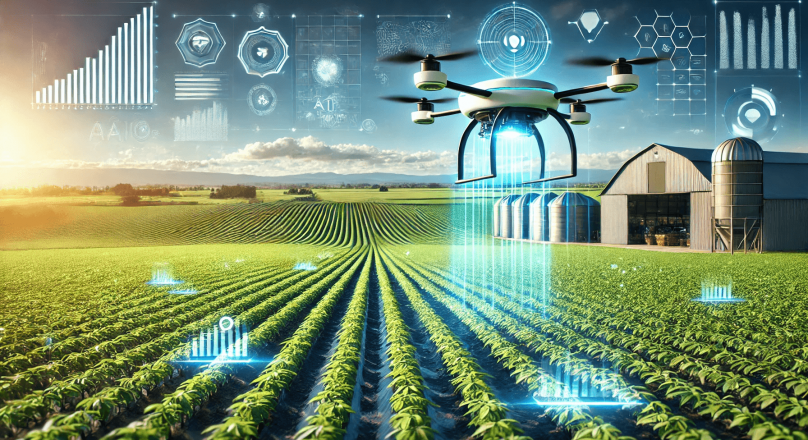
A new agricultural drone platform claims centimetre-level accuracy without pre-mapped fields. The shift could reduce operational bottlenecks for large-scale farms, where mapping and recalibration have limited drone efficiency.
Singapore-based DroneDash Technologies and GEODNET have formed a joint venture, GEODASH Aerosystems, to commercialize the system. The companies said the drone combines AI-based visual perception with real-time positioning corrections, enabling in-flight adjustments without preloaded field data. Commercial rollout is planned for the third quarter of 2026, following pilot programs conducted through 2025 and early 2026.
Can Autonomous Drones Replace Pre-Mapped Farming Workflows?
Traditional agricultural drones rely on static flight plans derived from repeated field surveys. But large plantations, especially palm oil estates, require frequent remapping due to changing canopy and terrain conditions, reducing operational efficiency. GEODASH’s system removes that step, allowing continuous deployment across dynamic environments.
The platform reflects a broader shift in AI-driven robotics toward adaptive decision-making. While warehouse automation operates in fixed environments, agriculture introduces variability that deterministic systems struggle to handle. Data from each flight feeds into DroneDash’s backend, generating metrics such as canopy density, plant health scores, and spray effectiveness.
“Agriculture does not need bigger drones – it needs smarter ones,” said Paul Yam, CEO of DroneDash Technologies and GEODASH Aerosystems.
The system is designed to operate within geo-fenced zones while logging decisions for operator review, balancing autonomy with oversight.
The initial focus targets Southeast Asian plantations, U.S. row-crop farms, and South American estates. If deployment timelines hold, the next catalyst will be whether real-time adaptive drones can materially increase coverage rates and reduce input costs during the 2026 growing cycles.



