
Aave is facing renewed scrutiny from within its own community after a delegate raised concerns about how revenue from a recent CoW Swap integration is being handled. The issue has sparked a broader conversation about transparency, incentives, and the balance of power between Aave’s decentralized governance and Aave Labs, the company that leads much of its development.
The discussion began when an AAVE tokenholder and Orbit delegate known as “EzR3aL” published an open letter on Aave’s governance forum. Their on-chain review suggests that fees generated through a new CoW Swap-powered interface may no longer be flowing to the Aave DAO treasury. Instead, they appear to be going to another address not controlled by the DAO.
 EzR3aL
The shift represents a notable change from the earlier Paraswap referral setup. When Aave integrated Paraswap into its v2 and v3 interfaces, surplus revenue from swaps was directed to the DAO without adding extra costs for users. According to the delegate, this created a modest but steady income stream alongside lending and flash-loan fees.
AaveLabs
With the CoW Swap rollout, however, Aave Labs introduced an additional 15 to 25 basis-point fee on swaps. Based on test transactions and public data, the delegate estimated that the new fee structure could be generating at least $200,000 per week across supported networks. They also pointed to specific ETH transfers made to the identified address in early December.
In their post, the delegate asked Aave Labs to clarify whether the DAO still receives any portion of these fees, whether the community was consulted before the switch, and whether any commercial agreements influenced the change.
Governance groups raise alarm
The Aave Chan Initiative (ACI), an influential governance body led by Marc Zeller, quickly entered the conversation. Zeller described the situation as “extremely concerning,” arguing that monetizing the aave.com interface has historically benefited the DAO, not private entities.
Zeller said the DAO has long assumed that revenue from the main frontend—including Paraswap slippage gains and swap-related flash loan fees—would feed back into the treasury. He also warned that using CoW Swap solvers may reduce Aave-driven flash-loan activity, removing another income source.
From Zeller’s perspective, the concerns extend beyond CoW Swap. He questioned the economics of Aave Labs-linked products such as Aave Vaults, the Horizon real-world asset platform, and the proposed Aave v4 liquidation engine. In each case, he asked whether revenue is being shared with the DAO and whether changes may shift value away from tokenholders without sufficient disclosure.
Extremely concerning.
— Marc ”七十 Billy” Zeller (@Marczeller) December 12, 2025
The stealth privatization of approximately 10% of Aave DAO's potential revenue, leveraging brand and IPs paid for by the DAO, represents a clear attack on the best interests of the $AAVE Token holders.
We will prepare an official response with @AaveChan. https://t.co/opoG3I7x7s
None of the points were framed as accusations. Instead, Zeller presented them as questions the DAO must answer before endorsing the next phase of Aave’s roadmap.
Founder Stani Kulechov responds
Aave founder Stani Kulechov addressed the controversy in a public thread, offering a different view of how the interface should be treated.
Kulechov noted that Aave Labs has maintained its own user interface for more than eight years and said it’s reasonable for the company to monetize that product, especially when the features extend beyond the protocol’s core lending functions. He emphasized that the underlying Aave protocol remains permissionless and that independent teams are free to build their own frontends.
He said that in the past, Aave Labs chose to donate Paraswap-generated surplus to the DAO but stressed that this was voluntary. The recent CoW Swap integration, he added, was intended to improve the user experience and deliver better MEV protection.
Kulechov did not directly address all of the specific questions raised in the forum, including the destination of CoW Swap fees and the exact revenue arrangements for Aave Vaults or Horizon.
A community seeking answers
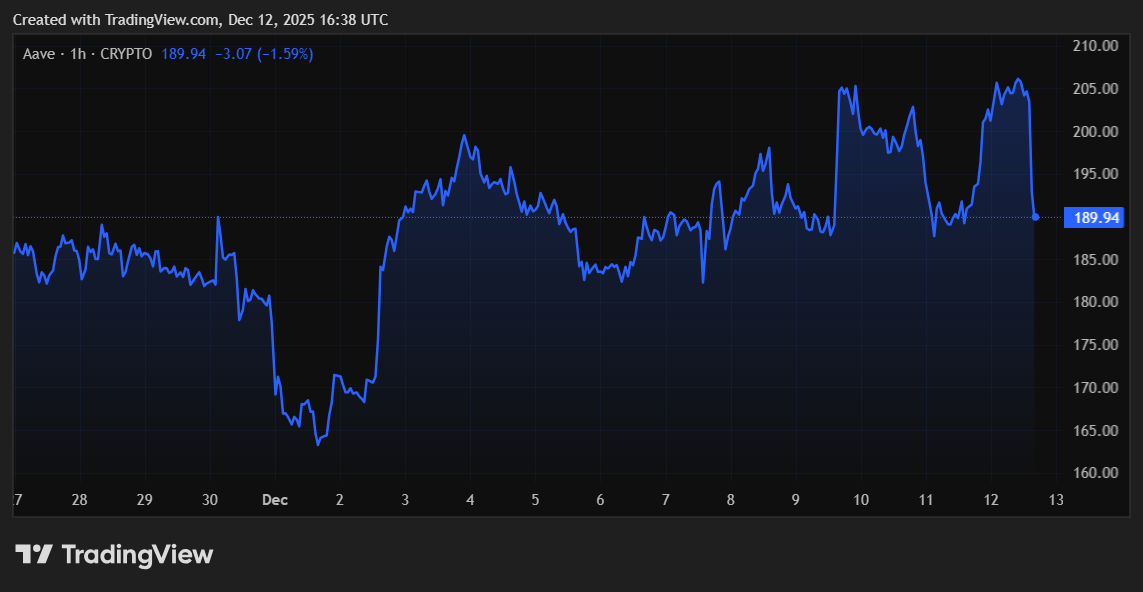
Aave remains one of DeFi’s largest platforms, with nearly $34 billion in total value locked and more than $100 million in annualized revenue. Its token, AAVE, has risen in recent market activity, but the governance conversation around revenue flows and responsibility is far from settled.
The current dispute highlights an ongoing tension in decentralized finance: how to balance open-source protocol ownership with the commercial interests of the teams that build on top of it. For now, Aave tokenholders seem focused on one request—clear answers about how decisions are being made and who ultimately benefits.



